By Poet Sharena Lee Satti

I looked in front of me, at the blank white wall and filled notebooks pressed together, stacked like a forest in the midst of July. I saw the books on the shelves with my name swept upon the front cover, pages upon pages of She and Shhhhhhhh. It still feels surreal. Me as a poet, as an author. Me with words in a book.
“It could have been so different,” and when I pause and reflect, I am forever grateful for this moment, for this time, for this life.
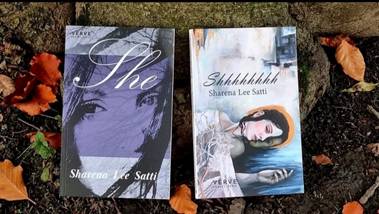
Looking at my books, I think about the younger me and the suppression of my own voice, and how through poetry I found the courage to allow it to emerge, how poetry empowered me to become the person I am today. And the same speaks for the young people I speak with today, who feel strongly that their voices are often lost in an adult world.
2016
When I look back at poetry and the poetry scene it feels very different to now, back in 2016, when I started sharing my poetry publicly. The poetry scene was filled with the noise of coffee machines steam, of pints being served amongst clapping hands, it was sweet, filled cakes amongst poetry breaks, it was throw over blankets, amongst patchwork quilted chairs. It was penguins, happy, happy penguins. Community spaces were places of connection, of strangers becoming your poetry family, connecting through words, that felt like an open log fire burning. The warmth, the wisdom, the becoming of the flames together. Rising as one.
The best poetry places, venues and events such as the Brick Box with Barbara, Kala Sangam, Gingerlicious events with David Driver, spoken worth with Simon Pickles, High Five, Bolts event in Haworth, Swalk with Phil Pierce and crew, Penguin posse with Peter Haney, Found Fiction with Steve, and other local community events.
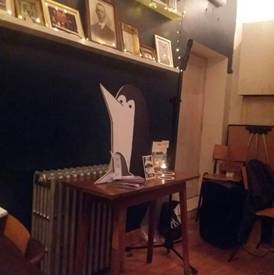
Some of my fondest poetry performances lived in the heart of these places. Not headlining, just there for the love of poetry and seeing your poetry family perform. Championing each other. There is a lot to learn from hearing other poets perform, and attending open mics was a key part of developing my own craft. While there has been a decline in poetry events like those I’ve mentioned above, the online world of poetry has evolved so much.
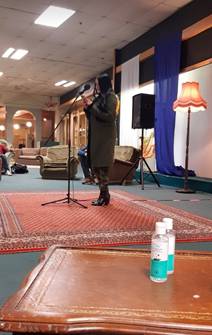
Poetry has become more accessible, with people more open to experimenting with it. The routes into creative writing have expanded so much for adults too, with creative writing outlets and workshops available for writers at all stages. From performing on stages to spoken word and page poetry, there is so much rich knowledge to draw from. Reflecting back, there were lots of open mics back then, that sadly don’t exist now, however poetry has evolved in different ways, with online spaces opening up new worlds too. There is always events posted online for creative writing workshops, open mics, sessions for online and in person. There is a lot out there for adults.
But the young people I have spoken with tell a different story. There aren’t enough spaces outside school for them to write and express themselves, and not every school has a creative writing club. Yet they are the ones telling us how much poetry means to them. Some have shared how deeply school phone restrictions have affected them. They used their phones to write poetry during breaks, at lunch and in creative writing classes. If that outlet is taken away, what replaces it? Where are the notebooks? Where is the support for young people who need to write? For some students, writing is a crucial part of getting through the school day. An outlet for emotions, for connection, for escape.
Where poetry is first introduced
I mean, let’s start with school.
Most young people are introduced to acrostic poems and haikus in primary school. For many young people I have spoken to, that is what they call the death of poetry. Then they meet poetry again at GCSE level, and the phrase comes back. This time, they have to study poetry, memorise lines upon lines that make little or no sense to them.
Why can’t poetry be more free flowing, less structured, no rules
Poetry, free verse, why isn’t this format introduced. And again from speaking with young people, I know they feel strongly about this too. Having the space to write to express rather than impress. Not about perfect punctuation and spelling, or neatly woven handwriting that passes the eyes scoring test. I think poetry should be messy, open, woven into a lesson. Just 5 minutes of self-reflection of pause, where young people have the space to be, to trust in the page, to express without judgement or fear. To be imaginative, to write for themselves, without having to make sense to others. The freedom to write, without having to add in full stops or perfect their spelling. Why isn’t writing poetry, the freedom to express taught in school?
This calls for a wider shift in the curriculum, giving teachers the space to nurture creative expression and young people the freedom to find their own voices.
When I reflect on my own journey, I am living proof of the power of poetry, the transformation of words. The teacher that believed in me, the planted seeds of hope.
I know poetry has power. It can build confidence, offer an outlet for emotions and create space for healing. It can open up life-changing pathways. Young people deserve the chance to discover that creative power for themselves and be allowed time to practice it within a school setting, because there is very little within the community for young people to share there poetry, or connect with others of similar interests.
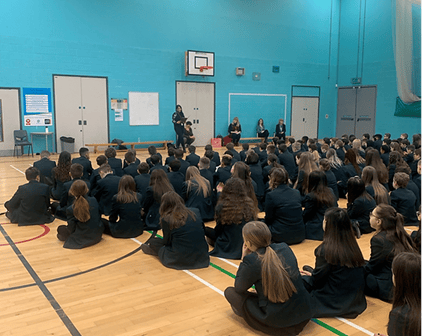
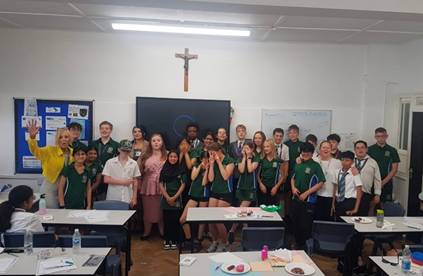
Hear it from the young people themselves. Their words speak of confidence, connection, understanding themselves and having the freedom to speak up. This is what St Bede’s and St Josephs Catholic College students had to say on the power of poetry:
Ava Singh:
Poetry has had a huge impact on my life, helping me grow in confidence, meet new people and discover new ways to express myself.
One of my proudest moments was being highly commended by the Poet Laureate. This was an incredible honour that encouraged me to believe in my abilities and recognise the value of my words.
Poetry has also supported my education massively, developing my vocabulary, creativity and understanding of language. Most importantly, it has given me a way to articulate my feelings and express thoughts, which is sometimes difficult to put into ordinary words.
Ultimately, I don’t see poetry as just writing, I see it as a powerful form of expression that allows us to communicate our deepest thoughts and feelings. It has helped me grow as a person, connect with others and discover the power of my own voice.
Grace Dominic:
Poetry is like expressing your feelings in a calm way, that benefits you, and the person reading or listening to you. It gets your feelings out it – its like your story and important piece of art that stays in your brain like a magnet.
Saffah Shahid:
Poetry has always been a way to express feelings, to let the bottle not explode, to speak up about experiences, to speak your truth, to let the bottle not overflow – to explore emotions that society ignores because they want us to be perfect. For me, poetry is more than words, it’s a way to connect with others, question answers you want, to change. It creates space for voices like mine, those who need to let it out, those who speak up, helping others feel seen, understood, and empowered with their words.
Zainab Imaan:
At first, I didnt like poetry and never thought it was something I would not enjoy. Poems felt confusing, boring, and hard for me to understand. I didn;t think poetry was for me at all.
Everything changed when I decided to try and give it a go. I learned that poetry doesnt need to follow rules. It can be simple, honest, and truthful to me (just me).
Once I started writing, I realized how powerful words can be. Poetry helped me express feelings I usually keep inside. It helped me speak up to what feels wrong and helped me understand myself better. I began to discover facts and write poetry.
It can inspire others who think poetry is not for them. I understand that feeling (don’t worry).
We need to show young people that poetry can be fun, expressive
With young people’s voices in mind
Poetry should matter to us all. Young people are the next generation, bringing change, bringing hope. We should be empowering them with the skills to express themselves with confidence, to be creative, to perform their writing. Giving them the space to share what they are passionate about and what they want to change. The future is theirs. Through poetry, we can make space for their voices to be heard.

Leave a Reply