Tag: reading

  • Incredible teen book group at Bingley Library

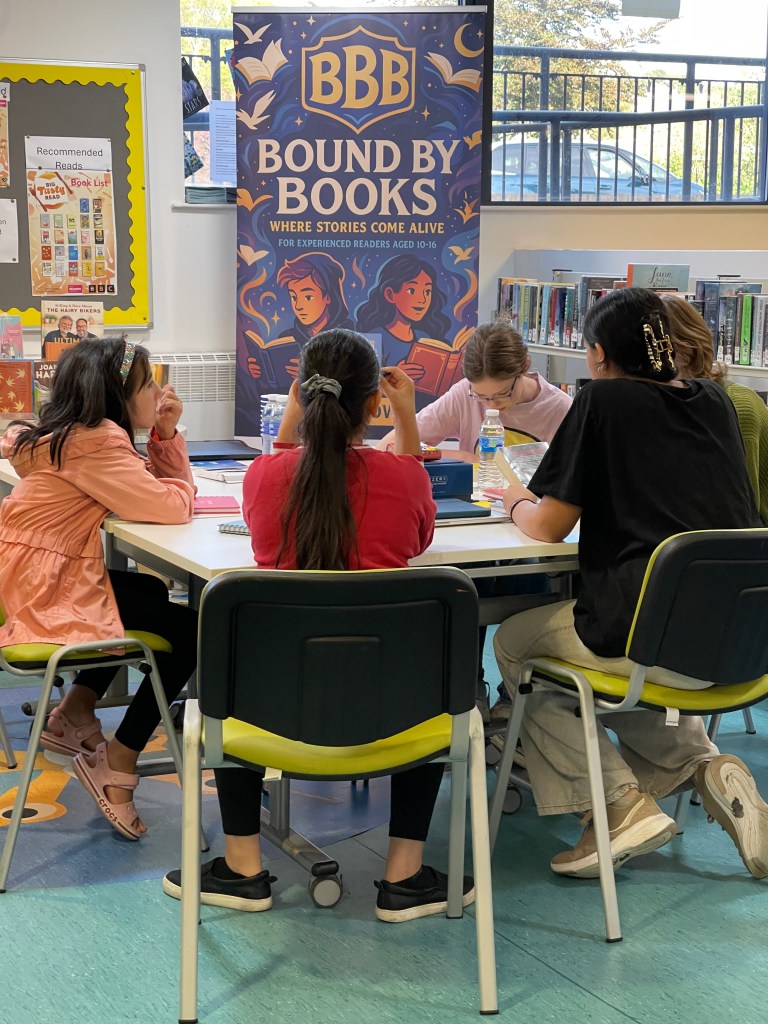
    In November last year, I was invited to Bingley Library to meet with members of Bound by Books, a youth reading group. At the time, I was acting Development Officer for Young People. I had the most enchanting evening, listening to the group speak about the book they were reading, (Lying About Last Summer), and speaking with them about their plans, hopes and dreams. The group is run by Ehlissya Naqvi, Literacy Lead for Youth – (313 Foundation)
    Bound by Books . She is an incredible young woman!
    This project is exactly what we want to encourage in our libraries.…especially during The National Year of Reading 2026.

    Ehlissya says…

    Bound by Books is a youth reading group for experienced readers aged 10 to 16, and we meet every Tuesday from 5:15pm to 6:15pm in Bingley Library.

    I’m the Literacy Lead for Youth at 313 Foundation, which is how the group first began. We have just finished our first six-week cycle, where we read The Hunger Games, and now we’re going to be reading Lying About Last Summer by Sue Wallman. We try to choose books that make us think deeply, we like mysteries, thrillers, dystopian stories and books where you need to notice clues and understand the bigger ideas behind a character’s decisions.

    I started Bound by Books because I wanted young people like me to have a place where reading feels exciting. A lot of people read online now, which is great, but reading a whole story together and talking about what it means feels different. In our group, everyone gets to have a voice, even if they are shy at first, and we do creative things like weekly reflection questions, short activities linked to sections of the book, and conversations about the themes. It has already helped people become more confident sharing their ideas, and it feels like a real community.

    One of the things that makes Bound by Books special is that we try to bring stories to life, not just read them. We have started connecting with other people and places because of the books we choose. For example, one of our members designed and made Bound by Books badges for the group, which helped us all feel proud of being part of something we built ourselves. We also go together to the Bingley Youth Café as a group, so we can share ideas with other organisations and be part of the wider community. We even met our local MP, Anna Dixon, who encouraged us to keep building confidence through reading and to keep developing our ideas.

    One of the most exciting things we’ve done is start a relationship with our local PCSO, Sofia Hussain, who visited our group at the library. She showed us her uniform and talked about teamwork, fairness and staying safe in the community. Because the genres we like often involve mysteries and investigation, we asked if we could learn more about real-life techniques that police use. Through that conversation, we have been able to approach Shipley Police Station to ask if we could visit and see how things work behind the scenes, like how officers look at evidence or use CCTV. It’s still being considered, but even being able to ask has made a big difference to us. We’ve also invited the police to join some of our creative sessions, where we explore fictional investigative techniques like fingerprinting, interview skills, analysing clues and building theories, because that connects directly with the kind of stories we enjoy reading.

    All of this has happened in only one cycle, which makes me really proud of everyone in the group. We started with a simple idea of reading together, and now we have built confidence, made new connections, shared creative skills, learned from each other and even reached places we never expected, like speaking with our MP and connecting with the police. None of this would have been possible without the support of the Bingley Library staff, who have been really kind and helpful from the beginning. They always encourage us, help with the space, and make us feel like the library belongs to young people too.

    If you would like to join the group, please contact Bingley Library.
  • Author Mandy Sutter’s Festive favourites

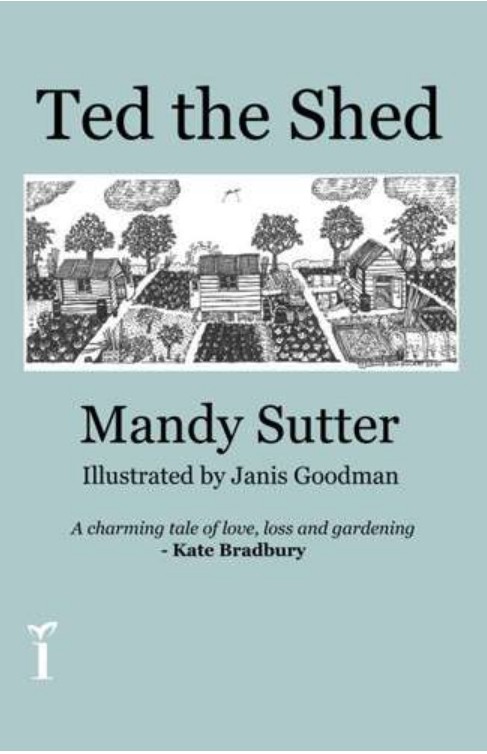
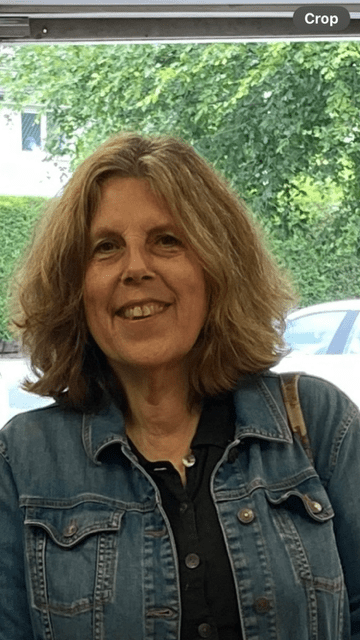
    Author Mandy Sutter (Ted the Shed) has appeared regularly at Bradford Libraries. Today she shares her favourite 19th Century festive reads.

    In my day job, I record stories for the sleep and meditation app, Insight Timer. I write some of these myself. But there are also plenty of classic stories that can’t be beaten, especially at Christmas.

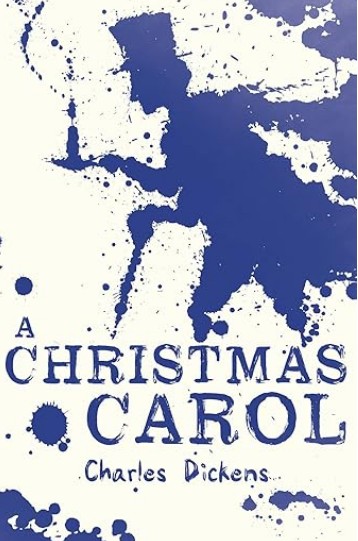
    One of the most beloved Christmas stories is ‘A Christmas Carol,’ by Charles Dickens. This comes in five instalments, or ‘staves’ as Dickens calls them, and if you’ve never read it, or only seen the film, it’s a must. You may be surprised to find that it’s extremely funny and that Scrooge, even at the beginning before his nocturnal transformation, is witty and even a little bit likeable. Dickens is sometimes credited with inventing Christmas as a time of generosity and joy and this story was a powerful force for social justice in its day.

    Next comes ‘The Gift of the Magi,’ by O Henry, which tells of a young American couple, much in love but very hard up, who try to buy each other a special Christmas gift. I won’t give away the ending, but it is touching and heart breaking all at once and makes you shout ‘nooooo!’ at the dog, or the cat, or at O Henry himself.

    There is a great Sherlock Holmes story set at Christmas, ‘The Adventure of the Blue Carbuncle.’ It’s quite a romp, involving a missing diamond, a thief and a Christmas goose. As you may know, Sherlock’s opinion of the police is never very high and here, Arthur Conan Doyle has his hero decide for himself whether to turn the culprit over to the police or not.

    Another place you might look for a good Christmas story is in the Just William books, by Richmal Crompton. All her stories (and there are an amazing number of them) deal with the rascally young William and his adventures. The great appeal of William is that he is thoroughly authentic and always sees through, and challenges, the hypocrisy of adults. In ‘William’s Christmas Eve,’ with a deliberate nod to Dickens, his good-heartedness shines through.

    But my favourite Christmas story of all time is Truman Capote’s ‘A Christmas Memory.’ Written in 1965, it’s an autobiographical story about a special friendship.

    ‘I am seven; she is sixty-something, We are cousins, very distant ones, and we have lived together—well, as long as I can remember. Other people inhabit the house, relatives; and though they have power over us, and frequently make us cry, we are not, on the whole, too much aware of them. We are each other’s best friend. She calls me Buddy, in memory of a boy who was formerly her best friend. The other Buddy died in the 1880’s, when she was still a child. She is still a child.’

    Capote beautifully reconjures their Christmas preparations, such as gathering pecan nuts, baking fruit cakes and even stealing a Christmas tree.

    However you choose to do it, reading even just one of these stories will enrich your Christmas.  Happy reading and Happy Christmas!

    Search Results for A Christmas Carol

    Ted the shed – Mandy’s book. Do check it out…it’s both funny and poignant!

    Search Results for Sherlock Holmes

    Search Results for Truman Capote

    You can find out more about Mandy Sutter here www.mandysutter.com

  • Book Review, ‘Water’ by John Boyne

    Review by Sue Hewitson

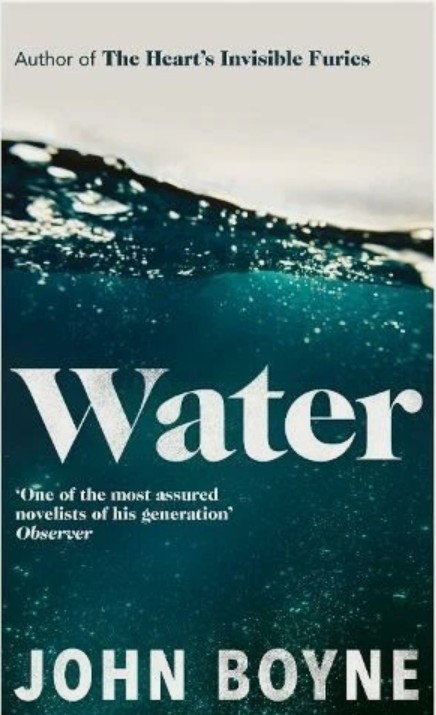
    “ Water” is the first book in the series” Elements” written by John Boyne. It is a short novel which sets the scene for “ Earth” “   “ Fire” and, finally “ Air.” The characters are linked throughout the four books. 

    We meet Willow as she gets off the boat on a remote island off the west coast of Ireland. The author tantalises us from the outset as we know this is not her real name plus she has cut off her hair. So we want to know why. 

    Thus begins the story behind her escape from a controlling marriage and the consequences of her husband’s behaviour. We meet the islanders who have their own histories, dreams and aspirations. Willow has experienced unimaginable loss and this island is there to give her back an identity. 

    The link to “ Water” is excellent in that it peels back the waves of disgust at what her husband had done. However, it also envelops her and sustains her recovery “ like a body emerging from near drowning , reaching the surface and gasping for air”.

    Despite being short, it packed a punch and drew me into island life. I was totally drawn and could imagine being there. This book made me consider how I would have reacted if faced with a similar dilemma. The tides kept throwing things at her but I liked how the islanders kept their council and did not judge her. 

    Boyne’s observation of people never fails to impress me and this story left a lasting effect. I have read the other three in the series and could not put them down. Interestingly, the title of each book is linked to the main character W for Water and for Willow! I totally recommend this book to anybody who enjoys a well written , well constructed book which draws you in from the first sentence.

    John Boyne is one of my favourite authors . He never fails to impress me with his use of language. 

    Sue Hewitson is a retired teacher who has loved books since she could turn a page.

    She says: My mum took me to the library in Brighton ( where I grew up ) at least twice a week as I devoured everything so quickly. I am now a volunteer at Baildon library and try to share my passion with other borrowers. In my view, a house is not a home without books hence I champion The Book Trust and The Imagination Library . All children should have books to read, peruse, enjoy. You should see my daughter’s house !

    You can find Water here (Number 11 on the list) https://bradford.ent.sirsidynix.net.uk/client/en_GB/default/search/results?qu=Water&te=

  • THREE BOOK REVIEWS…

    THREE BOOK REVIEWS…

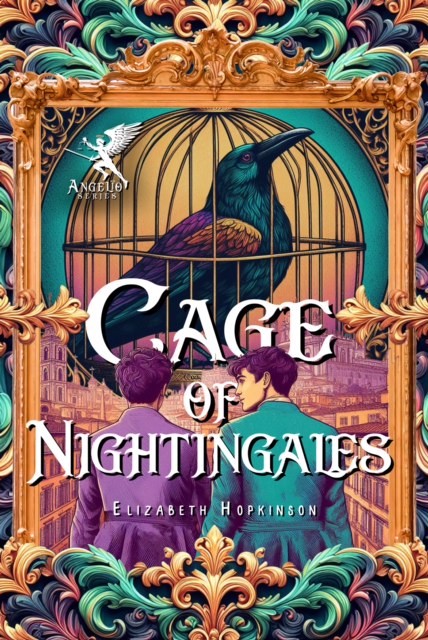
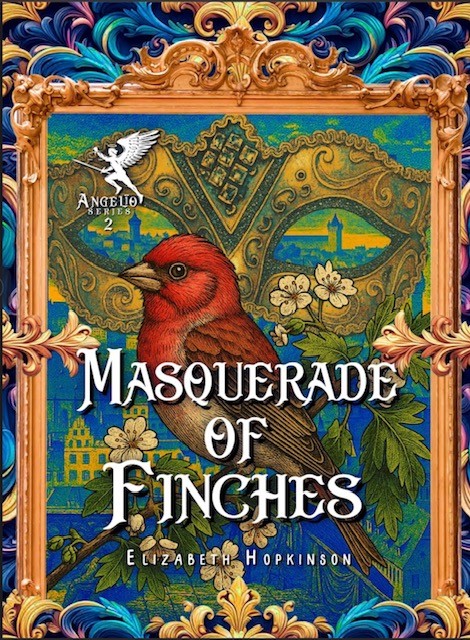
    Historical Fantasy Author, Author Elizabeth Hopkinson chooses three books from Bradford Libraries Collection she feels would be suited to three characters from her own Angelio series, Tammo, Carlo and Celestina… Have a read through and see if these are books that would interest you too…

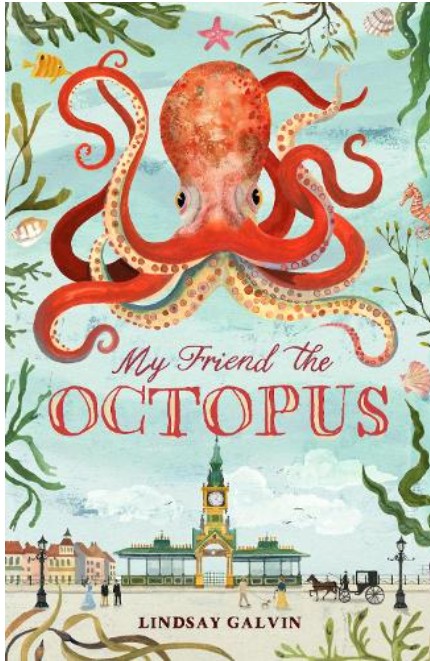
    IntroducingTammo. Tammo is a character in Elizabeth’s Angelio Series who plays flute. His heart’s desire is to be able to charm birds with his flute, and he forms an especially close bond with a crow named Coronis. Elizabeth thinks My Friend the Octopus would be a good read for Tammo and possibly you too! She writes

    I think Tammo would enjoy this middle grade novel set in 1893, about a girl called Vinnie who forms a bond with a giant octopus in Brighton Aquarium. The octopus – named Ghost – is initially billed as a dangerous monster, but is actually sensitive and nurturing.

    The idea of being trapped in a beautiful cage – so central to my novel, Cage of Nightingales – is also central to My Friend the Octopus. Not only is Ghost imprisoned in the aquarium, but Vinnie finds freedom from the restrictive world of high fashion and her mother’s milliner’s shop, with her 1890s “new woman” aunt, who wears bloomers, rides a bicycle and runs a tea shop. And Vinnie’s  new friend Temitayo – the African ward of an English gentleman – is determined to escape from being treated as a pet curiosity, and forge her own life (starting with being called by her real name).

    I just know that spirit of freedom in this novel would appeal to Tammo. And he’d enjoy the fast-paced adventure and mystery of the plot – not to mention the illustrations, maps and newspaper articles!

    My Friend the Octopus is children’s historical fiction which evokes the Victorian era. Fashion, attitudes to women, and the disparity between rich and poor are among the themes explored. It is suitable for readers aged 8+.

    My friend the octopus

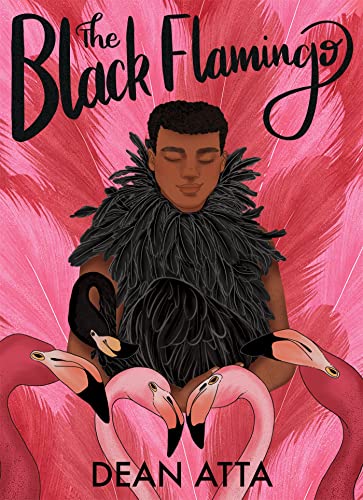
    A Book for Carlo – The Black Flamingo by Dean Atta

    Elizabeth has chosen The Black Flamingo as a read for Carlo- another character from her own series, who, she feels, would relate to this prose poetry autofiction about a young man finding his queer identity through performance.

    In Angelio, Carlo is a castrato, a type of opera singer that was wildly popular in the 1720s and 30s. Boys were made into eunuchs to preserve their soprano voices and trained intensively in schools like the Cage of Nightingales. People loved their androgynous appearance onstage, where they took leading roles, both male and female. Offstage, they were both fêted and persecuted. They are iconic for many queer people today, including asexual, nonbinary and transgender.

    Elizabeth thinks The Black Flamingo would really appeal to Carlo’s reading taste and here’s why…

    The Black Flamingo is about a young man – Michael – a gay, British teen of Greek Cypriot-Jamaican heritage, struggling to find out where he fits in the world. He has a poor/non-existant relationship with his father (as does Carlo), although he has other family and friends with varying levels of understanding. One of his questions is, “Does being gay make me less Black?” Michael eventually finds his place at the university drag society, creating his alter-ego, the Black Flamingo.

    Again, it’s short and easy to read, with illustrations and a beautiful cover. I think Carlo and Michael would enjoy exchanging outfits!

    The Black Flamingo is suitable for youngsters aged 13+ interested in gay young adult fiction.

    Search Results for The Black Flamingo

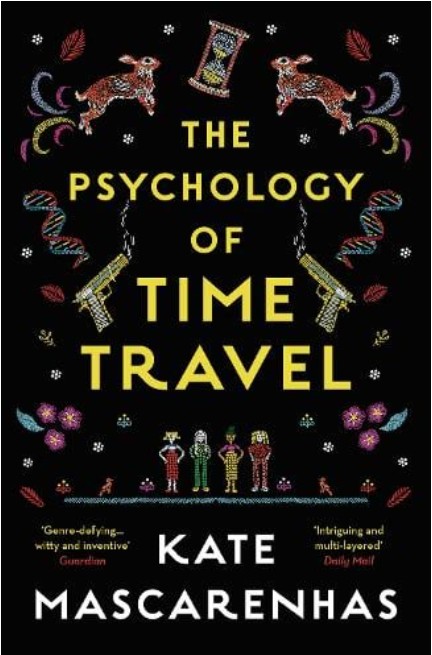
    A Book for Celestina – The Psychology of Time Travel by Kate Mascarenhas

    Born into a life of privilege yet excluded from certain aspects of high society due to her disability, Celestina, another of Elizabeth’s characters is a young lady who knows her own mind and is determined to forge her own path. Elizabeth thinks Celestina would love The Psycholoy of Time Travel historical sci-fi, consisting almost wholly of strong, female characters working in science.

    The book begins in 1967 in a Bletchley Park-like setting in which four women and a rabbit create the first time machine – but one of them (Bee) suffers a breakdown and is removed from the programme, her contributions erased. By the 2010s, time travel has become a vast organisation called the Conclave, headed by the controlling and emotionless Margaret. Meanwhile, both Bee’s granddaughter Ruby and a museum volunteer named Odette are attempting from different points in time to solve the mystery of an old woman killed in a sealed room. Could it be Bee?

    Like many disabled people, Celestina from the Angelino series is an early adopter of technology (she has a self-propelled, clockwork wheelchair and a hand-cranked lift) so I think she would appreciate  the scientific aspects of the story, but also the focus on how time travel affects emotions and relationships. And the controlling Margaret might remind her of her mother!

    The Psychology of Time Travel is a blend of science fiction, historical drama and mystery suitable for readers aged 15+

    The psychology of time travel

    About the Reviewer – Elizabeth Hopkinson is an avid reader and writer of the Angelio series, published by Deep Hearts YA. She/they are currently working on the third book of the series. Click below to see her titles.

Is this your new site? Log in to activate admin features and dismiss this message
Log In